We launched the PartnerStack podcast, Get It, Together, earlier this year with one goal: surface the conversations that change how partnership and GTM leaders not only think, but execute day to day.
Now we’re 10 episodes in, and as we kick off 2026, it feels like the right time to step back and reflect on lessons learned from our first conversations.
Because I like to have fun, let’s have fun with this. At PartnerStack, we call ourselves Pancakes. The story goes that we’re PartnerStack. You stack pancakes. Therefore, we are Pancakes. (I’ve been here six years and I still don’t know if I’m 100% certain where it came from, but let’s stick with that explanation.)
So I’ve taken each podcast episode, pulled out the key lesson and categorized the takeaway depending on how it fits into partnerships:
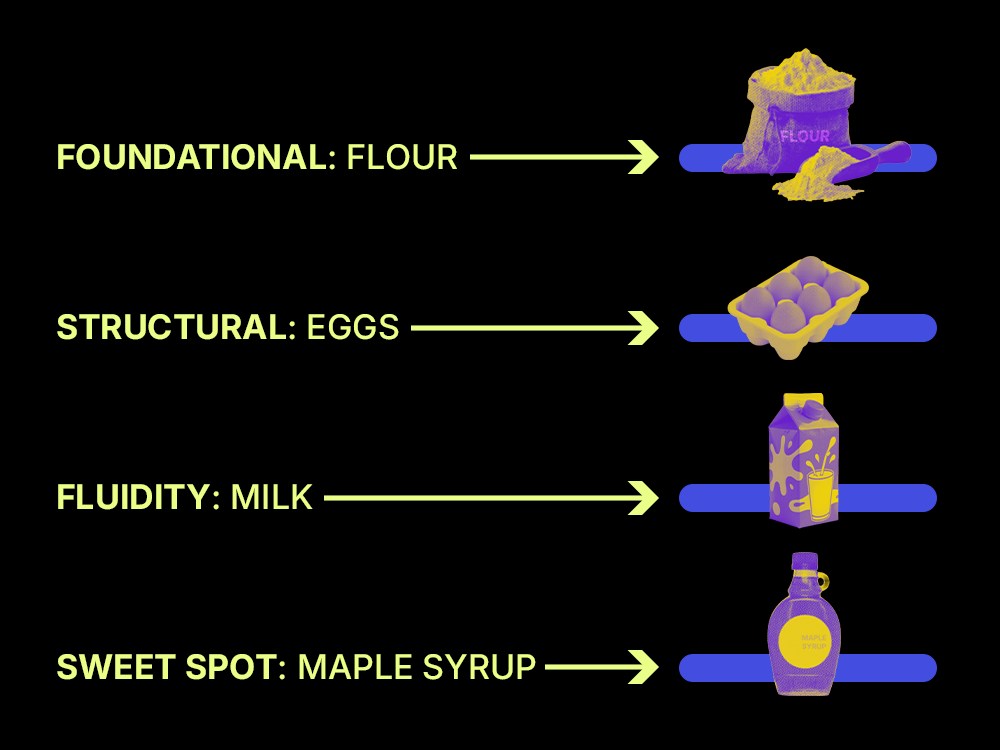
Foundational: Flour
The base. Without it, you’re just making a mess on the stove.
Structural: Eggs
Alignment. The glue that keeps the stack from collapsing.
Fluidity: Milk
Flexibility and adaptation. Staying ahead of the curve while everyone else scrambles to catch up.
Sweet spot: Maple syrup
Delight. Loyalty, trust and the layer that makes everything stick.
You see where I’m going with this, right? All of the ingredients to make a delicious pancake that’s part of a fluffy, revenue-driving PartnerStack. (It’s not too subtle, is it?)
Now, I’m not asking you to love pancakes. Candidly, I hate pancakes. They make me so tired (reference to the Nate Bargatze bit, IYKYK).
Doesn’t matter! Just follow me through the recipe and come along for the ride. Let’s mix things up.

Podcast lesson 1: Partners aren’t one‑dimensional
What’s the use? Foundational — flour
The idea: Today’s partners wear multiple hats. The average partner spans more than three roles and influences the entire buyer journey. To thrive, you must orchestrate a broad ecosystem rather than pigeonhole partners into single types.
How to stir it into your company: Map your customer’s path through the 28 moments of consideration and identify the partners who can influence each stage. Build programs that encourage partners to flex across roles instead of limiting them to one category.
Bite-size guest wisdom: “It’s never been about type. The average partner today checks 3.2 boxes.” — Jay McBain
Listen to the episode: The (next) decade of the partnership ecosystem with Jay McBain.
Podcast lesson 2: ROI or bust
What’s the use? Foundational — flour
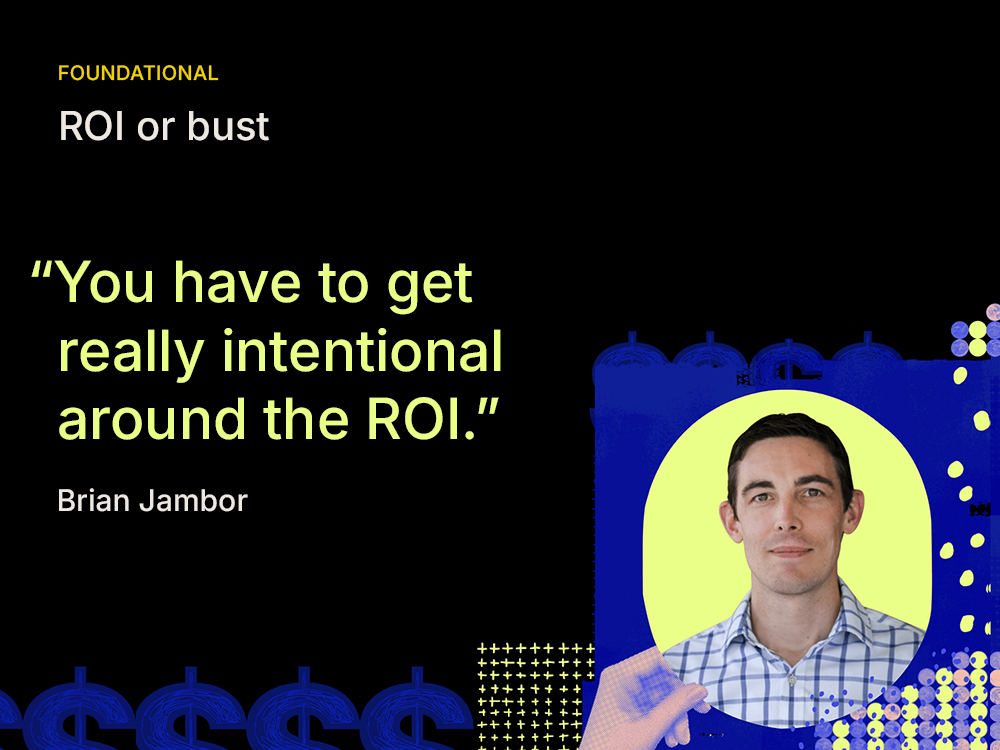
The idea: Partnerships are investments. Brian Jambor warns against chasing shiny opportunities that don’t pencil out.
How to stir it into your company: Map every partner — current and prospective — against expected revenue and ICP alignment. Invest where the math works. Cut the rest.
Bite-size guest wisdom: “You have to get really intentional around the ROI or you start chasing all of these partnerships that don't have a really tight return.” — Brian Jambor
Listen to the episode: How to build a CFO-proof partner model with Brian Jambor.

Podcast lesson 3: Master one integration first
What’s the use? Foundational — flour
The idea: Chris Lavoie says nail one strategic integration before scaling. Go deep with a single partner. Build the playbook. Then replicate.
How to stir it into your company: Identify your most valuable integration. Collaborate intensively with that partner. Prove it works. Only then copy the model.
Bite-size guest wisdom: “Figure out what is the most valuable integration you have today and go deep…. If you can’t do that with one, you sure as hell can’t do that with 10.” — Chris Lavoie
Listen to the episode: Building partnership programs that scale with Chris Lavoie.
Podcast lesson 4: It’s about their quota, not your product
What’s the use? Structural — eggs
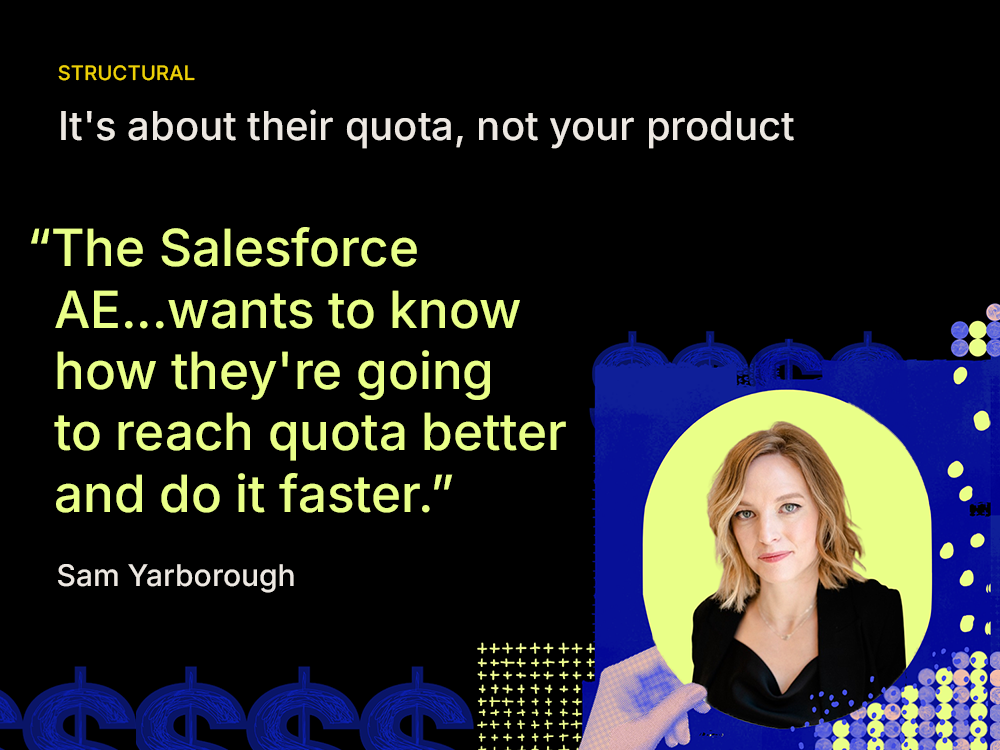
The idea: In the Salesforce ecosystem, success means making the AE look good. Sam Yarborough reminds us that AEs care about hitting quota and serving their customers. Your product features are background noise.
How to stir it into your company: Build a win story around a joint customer. Share intel that helps the AE hit quota faster. Talk about their success, not your features.
Bite-size guest wisdom: “The Salesforce AE gives a rat’s ass about your ISV. They want to know how they’re going to reach quota better and do it faster.” — Sam Yarborough
Listen to the episode: How partner managers can activate the Salesforce ecosystem with Sam Yarborough.

Podcast lesson 5: Partner ops is the new rev ops
What’s the use? Structural — eggs
The idea: Antonio Caridad positions partner operations as core to revenue operations. Buyers complete 70 per cent of their journey before contacting sales. Many start with a referral.
How to stir it into your company: If your data hygiene is poor, partner experience is inconsistent or your tech stack is misaligned, appoint a partner ops lead. Build the processes that turn strategy into revenue.
Bite-size guest wisdom: “Partner ops is growing. Partnerships are becoming much more and more critical, [because] 70 per cent of their buying process is already done.” — Antonio Caridad
Listen to the episode: How partner ops turns strategy into revenue with Antonio Caridad.

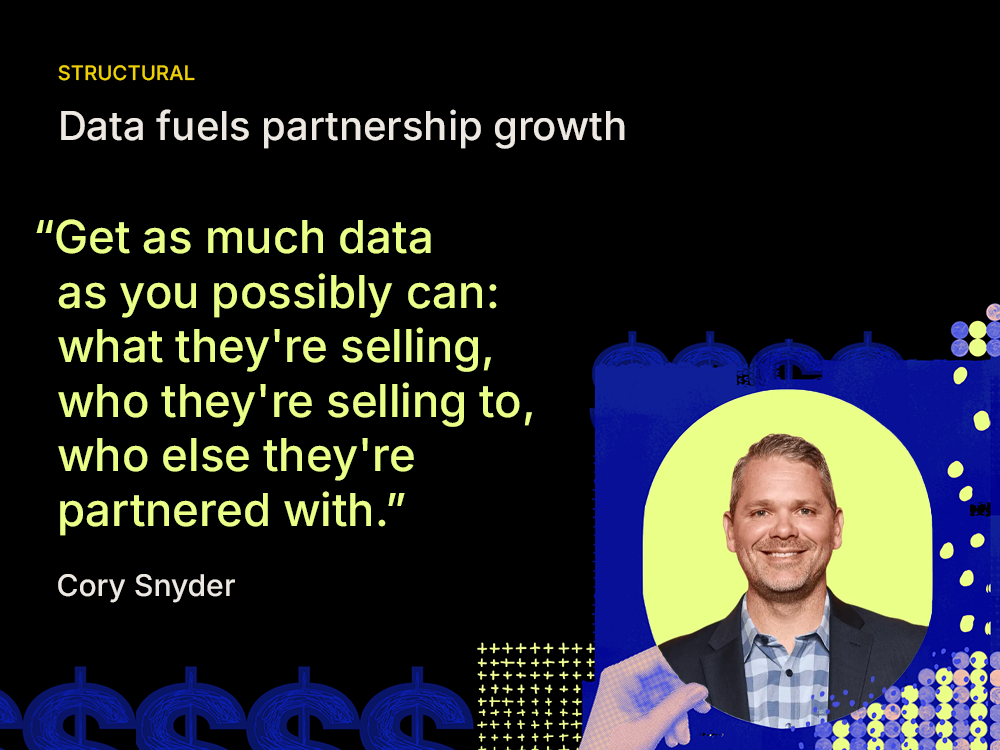
Podcast lesson 6: Data fuels partnership growth
What’s the use? Structural — eggs
The idea: Cory Snyder demands comprehensive partner data — who they sell to, who else they partner with, how they perform. Find hidden overlaps. Move fast.
How to stir it into your company: Build a partner data dashboard. Track leading indicators (partner acquisition, early revenue) and lagging indicators (pipeline, bookings).
Bite-size guest wisdom: “Get as much data as you possibly can: what they’re selling, who they’re selling to, who else they’re partnered with.” — Cory Snyder
Listen to the episode: How to build revenue-ready partnerships from day one with Cory Snyder.

Podcast lesson 7: AI adoption is non-negotiable
What’s the use? Fluidity — milk
The idea: Katie Landaal uses an internal AI platform to connect communications and identify the right reps and deals. Her warning: those who don’t adopt AI will be left behind.
How to stir it into your company: Integrate AI into a small piece of your workflow this week. Have an AI assistant scan your CRM and Slack for account signals. Start building prompt-writing skills.
Bite-size guest wisdom: “If you don’t adopt AI, you’re really missing out…. You’ll easily get kind of pushed out because you have to use it on a day-to-day basis.” — Katie Landaal
Listen to the episode: Navigating partnerships in the age of AI with Katie Landaal.
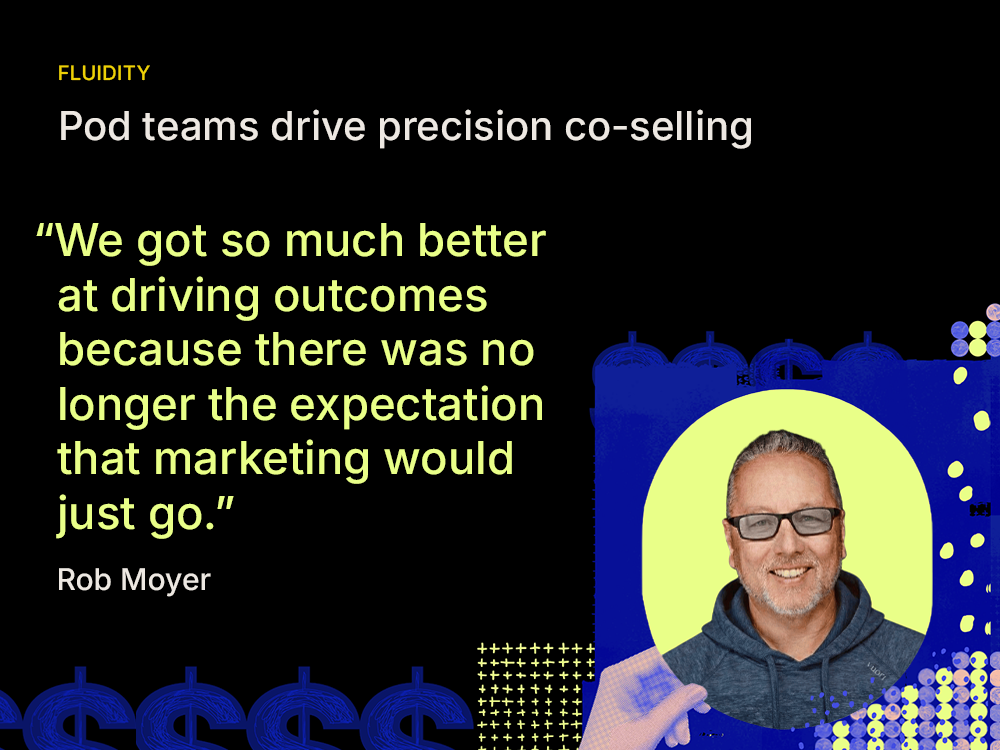
Podcast lesson 8: Pod teams drive precision co‑selling
What’s the use? Fluidity — milk
The idea: Rob Moyer argues that precision co‑selling comes from building dedicated pods for each partner type and funnel stage, and applying math‑driven account mapping. By structuring teams around hyperscalers, agencies or private equity and tying them to buyer‑persona data, you create focus and accountability.
How to stir it into your company: Break your partner org into pods with partner ops, enablement and marketing around a specific partner type. Create joint collaboration docs with clear goals and milestones, run TAM analyses to identify high‑propensity accounts and measure partner contributions at every touch.
Bite-size guest wisdom: “We got so much better at driving outcomes because there was no longer the expectation that marketing would just go. Marketing now knows specifically what this partner type was doing and how we were attacking the market.” — Rob Moyer
Listen to the episode: Co-selling with precision with Rob Moyer.
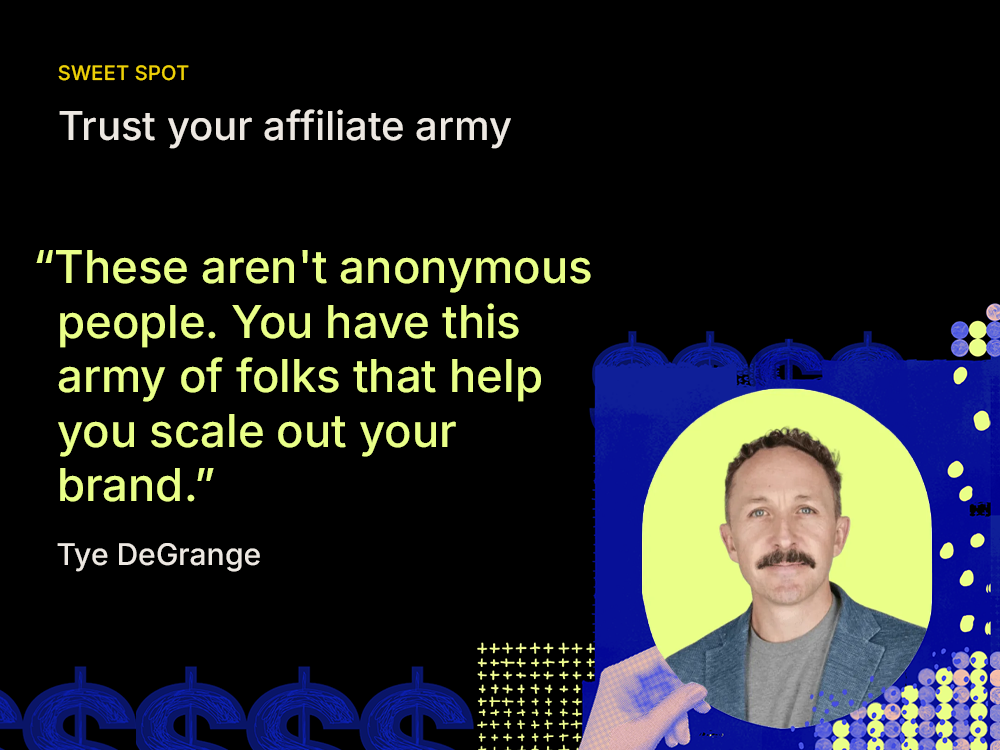
Podcast lesson 9: Trust your affiliate army
What’s the use? Sweet spot — maple syrup
The idea: Tye DeGrange rejects the misconception that affiliates are anonymous hackers. Modern affiliates are trusted creators with loyal audiences. They can become an "army" of advocates.
How to stir it into your company: Find a few credible creators in your market. Invite them into a pilot affiliate program. Measure engagement. Focus on authenticity.
Bite-size guest wisdom: “These aren’t anonymous people…you have this army of folks that help you scale out your brand…tapping into some of the greatest thinkers in marketing.” — Tye DeGrange
Listen to the episode: How to crack modern affiliate strategy in B2B SaaS with Tye DeGrange.
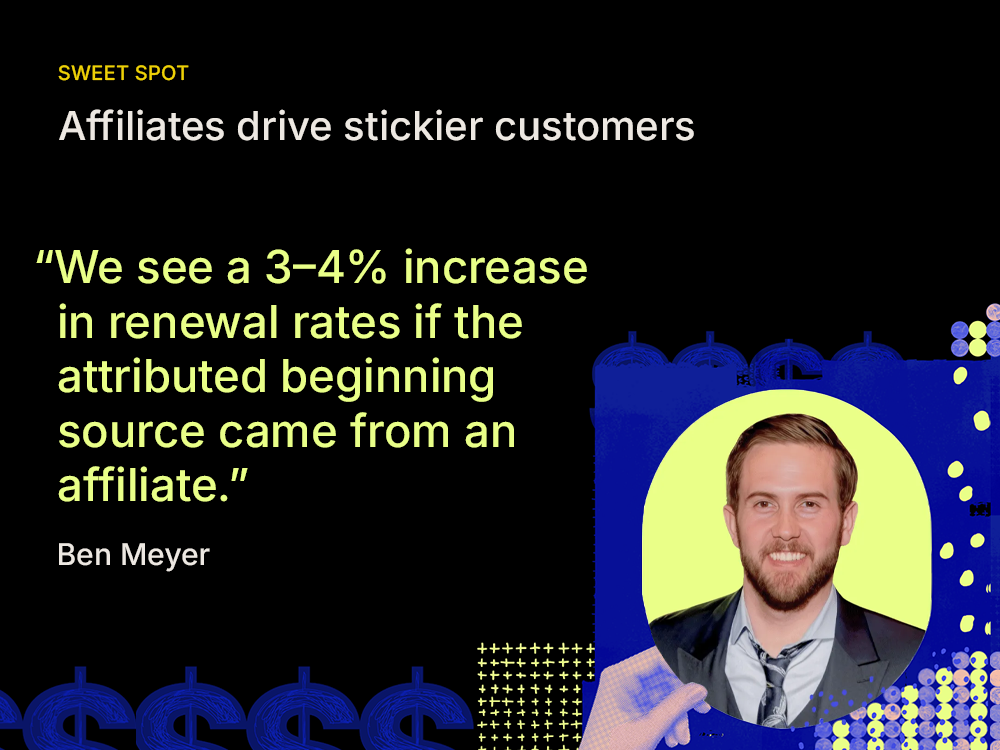
Podcast lesson 10: Affiliates drive stickier customers
What’s the use? Sweet spot — maple syrup
The idea: Ben Meyer quantifies affiliate value: affiliate-sourced customers renew 3 to 4 per cent more often and buy faster. Trust drives both.
How to stir it into your company: Expand your affiliate channel. Compare renewal rates and sales cycles for affiliate-sourced customers versus those for other channels.
Bite-size guest wisdom: “We see roughly a three to four per cent increase in renewal rates if the attributed beginning source came from an affiliate…. They go in purchasing with a higher level of confidence.” — Ben Meyer
Listen to the episode: How affiliates help SaaS companies scale strategically with Ben Meyer.
Podcast takeaways from 2025 — and looking ahead to 2026
From foundation (flour) through structure (eggs), fluidity (milk) and sweetness (syrup), our first 10 episodes deliver a full stack of insights.
Buyers demand frictionless experiences. Partnerships must be measured like investments. AI adoption isn't optional. Authentic communities, whether affiliates or answer engines, are the new frontier.
Whether you’re building your first partnership program or optimizing a mature ecosystem, these ingredients work.
Grab a fork. There’s plenty more batter to pour in our next batch of episodes. Get them here.
And for now, that’s enough with the pancake metaphors.