Using Data and Trust to Transform Partner Relationships With Lisa Forrest



Using Data and Trust to Transform Partner Relationships With Lisa Forrest
– Transcript
Lisa Forrest (00:00):
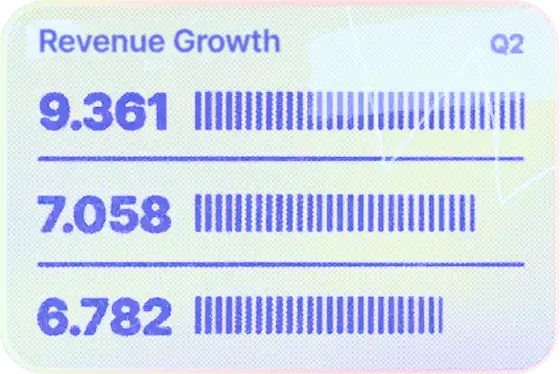
Going in with data lowers emotion. It is factual. General roll up with our data, we can say the homeowners that go through your website and get an estimate or look at any e-commerce, 45% of those are going to turn into an in- home visit, meaning almost one and two you're going to get in the door. And then once they're in the door and they're able talking to that homeowner, those close at a higher close rate and many contractors tell us 70% or higher. So when I share that with a partner, they're like, holy smoke, who doesn't want to close a lead at 70%?
Tyler Calder (00:32):
This is Get It, Together, the podcast where partnership and go- to-market leaders share the real stories behind programs they built and scale. In this episode of Get It, Together, I sat down with Lisa Forrest, the senior manager of partnerships and a contractor commerce, to talk about what it really takes to drive change in an industry that has done business the same way for decades. Lisa works with manufacturers, distributors, agencies, and coaching groups to help contractors modernize how they sell. That means putting pricing online, building trust through transparency, using e-commerce and AI to meet homeowners where they already are. And that sounds simple, but this is not the way that contractors have sold for the past 50 years. So it's quite the change that Lisa has been driving and has been driving with her partners. What really stood out to me is that Lisa is operating like a top 5% of partner leaders and not because she knows the language of partnerships, but because she is driving real behavioral change in a market that oftentimes lags and digital adoption with customers and partners who do not live and breathe tech the way many of us do.
(01:46):
That is hard. And she is doing it with education, with data, with trust and a very clear point of view. This was a super fun, sharp, useful conversation. I hope you enjoy. Hello everybody, and welcome to another episode of Get It, Together. Today I am chatting with Lisa Forrest, who is the senior manager of partnerships at Contractor Commerce. Lisa, welcome to Get It, Together. How are you doing?
Lisa Forrest (02:13):
I'm wonderful. Thanks for having me, Tyler. Excited to chat with you today about contractor commerce and partnerships here at Contractor Commerce.
Tyler Calder (02:20):
Yeah, I'm super excited for the conversation because I helped run a partner program that also served in- person contractors and it was a super interesting experience. There's some really cool differences between what a typical tech partnership looks like selling into other tech companies versus what you're doing, which is a tech company but servicing boots on the ground. Sometimes I think of tech as Lala Land and you're serving real folks, which is awesome. Do you want to tell people a litle bit about contractor commerce and we can dive in?
Lisa Forrest (02:57):
Contractor Commerce is a e-commerce platform that lives and breathes on contractors' websites, giving them the capability to sell their product services and do online estimates all the way to checkout and applying for financing all directly on the website.
Tyler Calder (03:15):
You have a pretty cool story of how you landed there. Correct me if I'm wrong, but you answered a LinkedIn post that basically asked the question, who wants to help change the industry? And you responded and that led to you being one of their first hires. Is that accurate?
Lisa Forrest (03:28):
Yeah. So our president, Paul Redmond, had posted on LinkedIn, like you said, "Hey, who wants to help modernize the industry?" And I'm like, "This sounds really interesting." I was at a manufacturer prior and loved that job. That's what got me in the trades, but I was like, "Hmm, what's this about? " And so I kind of dove a litle bit into it and that vision and that the story actually of our founder being a third generation contractor is really what led me to, "Hey, this is my alley. I'm ready for the challenge."
Tyler Calder (03:58):
One of the things that I'm really excited to talk about because I think it's a big challenge is in your space, one of the things that we've talked about is you and I that we talked about when we were prepping for this is you basically had to convince your customer base of making a change. And one of those change was adopting e-commerce practices, including pricing on the site. I want to dive right into that because you are working in a space that I think for decades was taught a certain way of going to market and you were asking them to change. Can you fill out sort of what I'm describing? What did this scenario look like? What was the difficulty in trying to drive this change? And then we'll get into how partners played a role in helping with all that.
Lisa Forrest (04:45):
I would hear things and being in businesses early on as a territory manager for a manufacturer, tech turnover leads, whether or not on a service call would convert into a sale or their phones would ring because they had things in the Yellow Pages. Well, people don't want to know what a Yellow Page is today. All those things are obsolete. But early on when we would do trade shows, contractors would literally avoid our booth. They would even avoid eye contact because they see our big collateral that says, "Put your pricing online." And contractors would be like, "Oh, I'm not putting my pricing online." And fast forward to today, people are walking up and asking, "Hey, how can I implement this? I don't want to be the last one left behind." So seeing that extreme to now people are approaching us. I think the biggest shift in that and what really changed the market was COVID.
(05:36):
And I hate to go back to that part, but COVID really taught operators and homeowners that they can be comfortable making purchases online. You can get your parts and pieces online as a contractor, but even the homeowner, we could get groceries delivered to our front door without even having to talk to a human. So I think those behaviors stuck and those are the expectations of the homeowner today. So contractors I think were starting to realize that in the conversations and wanted to adapt something that can help them meet that consumer where they're at.
Tyler Calder (06:04):
Who are the typical partners that you work with as you're going to market working with these contractors?
Lisa Forrest (06:11):
Yeah, so manufacturers, distributors of HVAC plumbing, electrical equipment, coaching groups. So anything from operations to sales and digital marketing agencies because we live on websites and a lot of agencies build websites and do marketing for these contractors. So those are a few of the key groups that we work with.
Tyler Calder (06:34):
You're in this interesting space where as I said earlier, there is a way of doing business that has been around for, I'm going to make up a number of 50 years. To your point, when I was somewhat in the space, we also worked with a lot of coaching groups, specifically sales coaching in particular and it's a very specific way of coaching. They have their binder of best practices, everybody follows the same binder and now you're coming in and you're even going to those coaching groups and saying, "Hey, we'd love to partner with you. Here's what we do. " We're trying to drive a pretty large shift in an industry that has worked a certain way for decades. How do you work with partners to help you make that shift in an industry like this? Because I think that's one of the most interesting things with partnerships is driving that type of change not alone, with partners.
Lisa Forrest (07:24):
I think what I realized, because I've known the company four years now, I've worn many hat and I realize partners are the people that kind of give us a lead that's kind of halfway closed and who as a salesperson doesn't want that opportunity. But I looked at it from a viewpoint of education and value. They're getting constantly bombarded by other partners of, "Hey, let me tell you how to do this or whatnot." But I think there's an analogy that jumped out that I can get them to quickly put themselves in the shoes of the contractor is that, "Hey, you're a consumer, you shop online, you went on a vacation last week, tell me about that process." And I can quickly see them kind of go, "Oh, okay, she's actually making a point here." And in a lot of those cases, they can compare options, they can get context, they can see, "Hey, if I add on this experience, this can save us $500." So I quickly looked at that analogy of you're a consumer when it comes to home services, you're not taking that hat off as a consumer and putting on your HVAC hat and say, "Well, hey, let me flip to the phone book and look under HVAC and see which contractor I need to call." So I think that was one commonality across all partners to share that because again, as a salesperson in a partner role, you have to look at it from a standpoint of how can it relate to them.
Tyler Calder (08:53):
Awesome. So that was the same analogy that you used both with your partners and the contractors themselves, put yourselves in the shoes of consumer.
Lisa Forrest (09:01):
Yes, yes. And I also think too with partners as well, depending upon which one, like coaching, they're looking at it from an operational standpoint where marketing agencies, okay, what is the return on investment? But I still think to that aspect, it's looking at it from a consumer standpoint as well. There's a lot of statistics. We look at Gartner and you're going to ask me some I know here soon, but putting pricing out there actually builds trust because you're getting the consumer what they want. They're doing this research and they're getting bombarded with all these things. Pricing's obviously going to be a question they have about a lot of things. If you are the one to lead with that, I look at it from my standpoint, I don't always go with the cheapest option. If I look at it from where I'm at, okay, who's educating me, who's making it easy to do business with, who's removing all friction points, I have that conversation with them and they're like quickly like, "Okay, this makes sense to me.
(10:00):
"
Tyler Calder (10:01):
And we're talking about, in this case, an example of a shift that you're driving in the space is pricing and transparent pricing. Was that one of the objections was, "Hey, if we put pricing out there, all of a sudden this becomes a pricing conversation only. The concern is people just buy the cheapest option and you're coming at it and saying, no, that's not actually behavior. People are still looking for value, but they also at the same time have an expectation that there would be transparency in pricing." Is that sort of the conversation?
Lisa Forrest (10:29):
That's probably one of the biggest objections is, oh, they're going to obviously, or they're going to look at me and they're going to say, "I'm not the cheapest. They're not going to go with me. " A lot of the contractors we work with are the leaders in their market and it's just about the process and how they set it up and how they communicate to the homeowner what to expect what's next. Yes, there may be some cases where you lose an opportunity, but you had that happen today with paper and prior. So what's the difference? And again, it's just talking them through that and having them realize and asking those questions that they know the answer to, but it's just having them look at it from a standpoint as a consumer again.
Tyler Calder (11:10):
You alluded to me asking an upcoming question, so let me just get into it and ask it. What role did the use of data play in working with both your partners and the direct consumer, the contractors themselves? It might sound like a simple question, but I ask it because I think there's a very deliberate way that you leverage data to drive change and adoption. And a lot of studies out there actually show too much data has the opposite effect, but it seems like you use data in a really impactful way. What did that look like?
Lisa Forrest (11:45):
So what's interesting with contractor companies is we do have integrations with FSMs and different CRMs with contractors because they all use different ones, but there's a leader in the market that we tie to that a lot of contractors track this information. But with us with data and obviously the AI resources that we have behind the scenes, going in with data lowers emotion. It is factual, especially with coaching groups, they want to know there's one in particular I had a conversation with a couple weeks ago, they always ask me about data and I came back with some really cool points of like, "Hey, your members get the most estimates on lunchtime on Mondays." And he's like, "Really?" I go, "Yep, look at here." And he was like, "This is super interesting. This is all the information that our members need to hear." I loved it. So it was solidifying what I'm sharing and it shows I'm not blowing smoke.
(12:44):
And then also as a roll-up, we work with over a thousand contractors as a general roll-up with our data, we can say, "Hey, of the homeowners that go through your website and get an estimate or look at any e-commerce, 45% of those are going to turn into an in- home visit," meaning almost one and two, you're going to get in the door. And then once they're in the door and they're able talking to that homeowner, those close at a higher close rate and many contractors tell us 70% or higher. So when I share that with a partner, they're like, holy smoke, who doesn't want to close and lead at 70%? So speaking to those numbers is what really solidifies. And again, like I said, it lowers that emulsion. It takes the motion out of it. It's factual.
Tyler Calder (13:31):
And so this is data that is partly proprietary to you that you're pulling out of your own dataset, not necessarily just general broad industry statistics.
Lisa Forrest (13:41):
Yes, yes.
Tyler Calder (13:43):
I love that because I think from what I'm seeing, and I think generally people are talking about this quite a bit now, which is one of the only differentiators and moats companies have is brand, but it's also data. What is the data that you have that nobody else has? And we've seen it in our partner program when we can share data that comes out of our platform with our partners that they can't get anywhere else. It not only helps to persuade in whatever type of recommendation that we're trying to make, but also just solidifies the partnership because they realize we're giving them insight that they quite literally can't get anywhere else because it's our data. And so I love that because I think the more partner leaders can look at what's the insight and data that I can get out of my org and share it with my partners, that's just going to solidify those relationships more than just about anything else.
Lisa Forrest (14:43):
I agree. I agree. And there's one thing I heard that I still take to part and any role as a territory manager, a regional director for this manufacturer was like, "Put cookies in the cookie jar." You're not there just to move a box and add dollars. You're a consultant, you impact every part of their business. So if you continue to bring insights and things that they may not know and are a consult to them, it's going to be easier when you have something that you may need to ask them. It's going to be easier for you to get something in return. And that's not what it's about, but it just made me look at this business as a whole as I'm not here just to move a box. I'm not here just to sell an e-commerce store. I'm really impacting someone's business and I don't take that very lightly.
(15:27):
It's a serious thing. I love the salt of the earth. I think contractors are family-owned businesses and are very prideful and they hand it down legacy upon legacy. And so there's a lot of that still here and it's really cool to see and when I hear those stories and share that and they give it back and then I can go tell that and spread that news and spread that story and it just snowballs.
Tyler Calder (15:49):
When you think of the various types of partners that you do work with, so coaching groups, marketing agencies, distributors, manufacturers, how have you organized your partner program? So I suppose what I mean by that, are you treating them differently? Are they being incentivized differently? What does that look like gives you work partner to partner?
Lisa Forrest (16:10):
Yeah, great question. So it is kind of broad. In fact, I've had two partner calls today that are completely different opposite spectrums. One works with distributors and one is an AI outbound agent software that answers phones and does speed to lead for contractors. So opposite spectrum there. So I think the first and foremost is one, the best partner programs go beyond referrals. I say that it's not just a lead swap. This is collaborative. How can we make an introduction? How can we team up and bring value on a webinar to educate how our two brands can help the business and it not be a sales ask, it'd be insightful. And then really finding out what's important to them. What does a partnership look like back and forth with you? And for a coaching route that's around business transformation and operational growth. For an agency, they're going to be wanting to know conversion rates and tracking and attribution and SEO and how are leads monetized.
(17:12):
For manufacturers and distributors, it comes down to the contractor selling more equipment and creating customer loyalty and stickiness. So with partnerships, it's really about the success journey and understanding what's important to them and how we can go beyond just a lead swap.
Tyler Calder (17:28):
Can you say more about what you just said, move beyond just a lead swap? What is moving beyond a lead swap?
Lisa Forrest (17:37):
Yeah, to me it's so what's really cool is there's one partner I was like, "Man, this is great." We have a spreadsheet and we're going to talk about, okay, here's a form fill where you can drive someone to go if they're interested in learning more about contractor commerce or, "Hey, here's a way that they can learn about X agency on our partner page. Hey, I think there's a webinar here. How can we talk about how AI is impacting contractors' businesses and what we're doing with AI? Hey, we're going to be at this show in the fall." Maybe we do a pre-planned pop-up happy hour that we can invite co-clients and we can have a conversation and see if there's any synergy there. We can use tools like CrossBeam and see if we have co-customers that are working together. Just again, just peeling the onion back layer by layer and seeing how we can, again, just take it beyond like, "Hey, Lisa, here's an intro to X, Y, Z heating and air, have at it and it stop there." I mean, it's great.
(18:40):
I appreciate that and you thinking, but to me, again, they're truly collaborative and it goes beyond the lead swap, if that makes sense.
Tyler Calder (18:49):
I know contractor commerce, you've recently launched an AI powered conversational buying experience. Again, going back to this theme of bringing partners along for the ride, how are you bringing them along? What does that look like? Introducing something that is cutting edge in your industry probably requires a lot of enablement. Again, I go back to you are quite literally driving a significant amount of change in a space that historically has been kind of antiquated. How are you bringing partners along for the ride?
Lisa Forrest (19:21):
Well, I think it's just reminding them our point of view. It's like consumer shop online, your customer is that consumer. We laid the foundation that, "Hey, you should put your products and services online to make it easy to do business with. " And then we added the layer of transparent pricing. Well, now it's AI powered buying journeys. Say that 10 times fast, but it's positioning AI as an enhancement to the experience and not replacing the contractor. This new AI powered conversational experience is going to help the homeowner and the contractor learn more information about the homeowner. As consumers, we've gone to these LLMs and had full-on conversations with it like it's our best friend, filling in a lot of health information that we wouldn't even tell a doctor. Again, that person is the same person that's going to buy an HVAC unit. So if you're going to make it a way to get the homeowner more informed by allowing them to upload a picture, if I just want to upload a picture, I'm too busy, just tell me what I need and then let them add a cart, let them even apply for financing, let them put a down payment, even letting them check out.
(20:34):
I mean, a few weeks ago we did have a homeowner check out on one of our customers' websites and buy a water heater installed and we're like, all right, this just solidifies what we've built. And then there's a couple other things that are happening in the space that just reaffirm why we did this. And I shared that recently on my LinkedIn and it's pretty interesting. If you want me to get into that now, I can share
Tyler Calder (20:57):
This. Yeah, let's get into it. What are some of those things?
Lisa Forrest (21:01):
Yeah, so two things and they're both Google and we all know Google is key. Google, I noticed three months ago added a button filter that's online estimates. So if you go into your browser right now and you type in AC repair near me or HVAC quote near me or HVAC quote Charlotte, North Carolina, the first filter that's going to come up is online estimates. Now, when a homeowner clicks that, it's going to filter down to anything that's going to be giving information related to online estimates. And what we're seeing here at contractor commerce is our customers are showing up and the biggest part is that AI overview, which is one thing you're going to see mostly on a mobile view because most people are looking at this information on a mobile device or on a tablet. The second thing, and this is what I was mentioning and I shared on LinkedIn is Google just announced that it's changing its search bar for the first time in 25 years.
(21:57):
And to me, that's a clear indicator of where it's going. They're going to make it to where a consumer can upload an image, upload a video, and it's going to analyze it. It's going to prepare for longer conversational prompts. And that's exactly what we've built at Contractor Commerce. And now this contractor's going to have so much more context about what this consumer's looking for versus, "Hey, we have a lead opportunity. Let's call them, let's book it. " Now you're going to know what this homeowner's actually seeking in the actual environment that they're in right now. Oh,
Tyler Calder (22:30):
That's super cool. I mean, what I'm hearing is you anchor to a thesis, you anchor to a point of view and everything that you're bringing to partners goes back to that point of view. So in this case, it's consistently consumer buying behavior has shifted, those changes are hitting the home improvement space, you got to come along for the ride, which I think as simple as it sounds is really powerful because what I oftentimes see with companies working with partners, there's too much change anchored to too many different points of view. Sounds like you're driving a lot of change, but it's all anchored to the same point of view. So it doesn't feel like this knee-jerk reactions to an industry, partners aren't getting whiplash. It's like you're just building on the same point of view over and over and over again, which makes it much easier for those partners to come along for the ride.
(23:26):
Is that a fair assessment?
Lisa Forrest (23:28):
I would. I would definitely say that. I think being anchored to that foundation, that point of view, it's also built on trust. I mean, to me, it's a full circle moment. What led me here was, hey, this is a contractor, a third generation that sees things are being done differently. Angie's list home advisor was coming into the space and driving leads and he saw it as a way, "Well, I'm the contractor. I'm the trusted contractor for this homeowner. I should be answering this question." And then having that credibility and then people in this industry that have joined contractor commerce that have built great credibility and trust and just again, just this is our. We're not going to change it. It may evolve, but we are standing still on, "Hey, we are the e-commerce platform for the trades come along for the ride."
Tyler Calder (24:18):
How often are you meeting with partners?
Lisa Forrest (24:20):
Every day today, I've been in the role now, well, I was doing it along with sales for some time last year, but then officially the senior manager of partnerships at the beginning of the year. So we did have a great cadence built with some, but I wanted to make that regular. Like I told you, it's not just a lead swap. Let's meet at least once a month and have, let me tell you what's happening, what's going on, let me show you some success stories. And even if something happens, like I had one with a coaching group a couple weeks ago that a customer was like, "Hey, in the month of March, we had 20 people walk through and get a quote on our website. 12 of those were an opportunity that we got into the home and we sold $68,000 in revenue. And I was like, I don't need a Zoom meeting for this.
(25:07):
I'm going straight to the email and sharing it so that they can get it out to all their team." And so they love those kind of things. I think it's more than just a meeting. I think it's just things like that or seeing each other at a show or, "Hey, are you going to be at this event?" And if they're not, then it gets that partner maybe an opportunity to join. So it's activity every day.
Tyler Calder (25:30):
Is there a regular cadence? Are you for sure meeting once a month, once a quarter, doing business reviews? What does that look like from an operational standpoint?
Lisa Forrest (25:42):
I want to say the ones that are a little bit more in depth, like the coaching groups, I'm meeting with bimonthly, if not quarterly. But I would say that Cadence is more frequent because they do a lot of events like, "Hey, we're going to do a dealer meeting at so- and-so's location. We want to invite you to have a 15-minute preview and do a little open Q&A session or, hey, we're going to do a lunch and learn with all of our marketing coaches. Can you sponsor it and bring in lunch?" And those things happen outside of just the regular cadences. For me, it's like I always say this and it's quoting a Disney movie, The Little Mermaid, as Ariel says, "You got to be where the people are. " And this is a very much handshake business. Yes, we're on Zoom and these are great opportunities, but it's very much still get down in the dirt, go visit a contractor.
(26:34):
And I love that. I'll hop in the car and drive an hour south to go visit a customer and do an in- person meeting because there's something to say for that instead of just sending a Zoom link. So I'm always looking for creative ways to get in front of people.
Tyler Calder (26:49):
For partner leaders that are in a space like yours, which is candidly one that I think historically has been antiquated and has lagged in digital adoption, I think you've probably alluded to a lot of this already, but what are some of the things that you would recommend to those partner leaders to really help work with partners to drive that change? Again, I think you've probably mentioned a number of these, but if you were to almost rank order them, where would you point those partner leaders?
Lisa Forrest (27:26):
It starts with educating and being insightful and not pressuring. Sales follow, but if you show up as a educated leader in the space, know what you're talking about, talking about those data sets and using the data that you have and sharing the stories, like I just mentioned earlier, I think that will provide so much more value. I think resistance comes from fear of change, but if you're educating like, "Hey, this is where we're at, this is where we're going, this is where the industry's going, " they're going to quickly see, okay, this person knows what they're talking about. You have to show your partners that consumers have changed. We've evolved. And to open their eyes from that standpoint, again, you're the consumer too. You buy all those vehicles that your technician's driving, you probably bought them online and giving them examples within their everyday lives to be able to shift that into something that's relatable instead of threatening and that's where the defense mode comes down.
Tyler Calder (28:30):
Are there mistakes that either you've made or you've seen other people make while kind of driving this change that you would suggest people are aware of?
Lisa Forrest (28:42):
Well, I'm going to come from the contractor viewpoint is when we're meeting with contractors and we talk about it and they love it, usually it's the owner, the operator and then their marketing department and they love it. Then they're going to pass it off to an e-commerce champion or somebody to champion this. The ones that don't implement this throughout their whole entire business and say, "Hey, we've added e-commerce as a way to get our website to work twenty four seven and act like a salesperson or an insightful tool twenty four seven while we're sleeping on the weekends when we have after hours and educate their technicians, their CSRs, their sales team, their install team, their service team. If they all know about it, those companies win. If it's one of those things that they just slap on their website and they're like, okay, every now and then we're going to get an opportunity, you're going to have some strengths there.
(29:40):
So I think the ones that adopt this fully across all the organization are the ones. So I think with us, it's making the mistake of, hey, we're going to onboard you and get you going, but not talking about it throughout the business, I think that's an opportunity, but we've done a good job here at Contract of Commerce that even now It's one of the part of our terms and conditions. This is your success playbook. We needed to have a meeting with your marketing company and talk about the best practices because we know we see it every day. So I think that would be one of the mistakes, but we've quickly learned to make it a great opportunity.
Tyler Calder (30:18):
I'm curious, I think a lot of what we've talked about in terms of working with partners is one-to-one, like working with partner by partner. Are you doing any sort of broad-based marketing into your partner base? Are you doing partner events? Anything there or is it very personalized one-to-one relationship driven? What does that look like?
Lisa Forrest (30:40):
Well, it's actually all over the board. So I actually manage our trade show calendar as well. So anything from a distributor event to an agency that's doing a more curated experience. I'm actually working on one now with an agency that's going to be the steps throughout the customer journey and they're going to bring a partner in in each step of that journey and we're all going to do a masterclass for an hour talking about our field. I will say the trade shows are great opportunities, but I think contractors have learned that this is just another trade show. It's very expensive. So as partners, we've gotten together and how can we do these small, curated, insightful events that bring so much value but new information that these contractors can walk away from. In fact, next month I'm going on one, it's just a vendor summit. It's only vendors.
(31:35):
No contractor will be there. There's I think 20 companies that are going to get their heads together and talk and collaborate and how we can better support each other's businesses and what's to come. And that's everything from an agency, a coaching group, an AI agent, all these different tools that contractors use. So it's very curated to, again, where can we be five steps ahead?
Tyler Calder (31:59):
I mean, consumer expectations are going to continue to change. You even just mentioned the shift in Google and the search bar. That alone is going to drive change in how we search and expectations with it. What trends are you seeing that you think will have the biggest impact on how you think about partnerships over the next couple of years?
Lisa Forrest (32:21):
AI gets tossed around a lot. Again, I think it's how you explain you're using AI and not just saying AI to sound cool. That is going to be a big impact as well as search behavior. Consumers are going to be increasingly high expectations wanting instant gratification. I mean, Amazon did a good job at it. I've used the term, we've all been Amazonified. We as consumers want to feel special, so we're going to want personalized recommendations. We're going to have self-service research. We're going to do all these things ahead of time to the point that I may not even want to talk to someone where then it's going to be agentic, where an AI agent can actually do all of that for you and you had to just type in a couple things. The companies and the partners that win in those elements, reducing the friction but still preserving some human aspect and giving that customer that experience are the ones that are going to win.
Tyler Calder (33:20):
Anything that you're doing internally as you manage partners with AI that's helping you in your day-to-day. Anything that you've done to operationalize AI within partnerships and your partner work?
Lisa Forrest (33:34):
Yeah. So we do a lot with Claude and cowork. In fact, we talked about it this morning on our sales call. Our president was like, "Gone are the days that people are going to do things for you. You have to do it yourself." I was reading in art morning too, "Your job's going to be gone in 2027, and I'm not going to lie, it freaked me out a litle bit. Okay, what can I do to get ahead?" Again, I said the five steps ahead. I've done a lot of projects and any key partner has a project within Quad and ChatGPT and gaming them up against each other and just making it simplified and having, okay, here's our partner checklist, here's the key details, here's a layout of what to expect for the year and really having that plan. I'll be honest, I have a lot to learn.
(34:22):
I'm going through the Claude courses currently and I'm like, goodness, I have a lot to learn. I'm kind of in that weird age of I was born in 1986 and so I had a taste of, I don't want to say normalcy, but that's the first word that comes to mind. I was on a DOS computer and throwing bananas at a gorilla on a tall statue with a DOS computer to now it's like, holy crap AI agents are going to make purchases from start to finish. So it's a really weird feeling at the age that I'm in, but I don't want to be left behind. So I'm taking my advice that I'm preaching and just dumping myself into the tools and resources because I'm like, if a 15-year-old kid can get on and build it, I'm like, I better know how to do that.
Tyler Calder (35:08):
I love it. And I completely agree with the feeling. I'm an 84 and you can remember I didn't even have a cell phone and I would play outside and I didn't have to worry about taking Claude courses to stay ahead of the 15-year-old. The Claude courses, that's what you're diving into, the Claude Academy. Any other resources that you've tapped into that you'd recommend or that's been doing the trick?
Lisa Forrest (35:37):
That's done some of it. And then hiring Brad Felix, he's our director of AI and he's been a great resource. I'll throw things against Slack him and ask him, get his opinion. I'll read something and he'll send something my way. I think again, it's collaboration and it's also internally. We have a lot of smart people here. I think what I love about the trades, it is a lot of contractors, but then it brings people like myself. I started out at Enterprise Rent-A-Car for this job out of college, sold wine, but there's a lot of people like me that bring an outside view into this trade to look at things a little bit differently. So I think team collaboration, we're constantly meeting and talking about things. Like I said, this morning we talked about you better put the work in and you do the work because no one's going to do it for you.
(36:27):
And so I mean, if anybody doesn't hear that loud and clear marching orders, then I don't know what more it could be.
Tyler Calder (36:34):
Folks wanted to get in touch with you. How might they go about doing that?
Lisa Forrest (36:39):
It's a great world we live in. I am on social media, I'm on Facebook, I'm on Instagram, LinkedIn. You could shoot me a text, give me a call. I'm in the States. I live in Charlotte, North Carolina. You can email me Lforrest, that's F-O-R-R-E-S-T at contractorcommerce.com. Would love to chat and have a conversation, but this has been awesome. I've really enjoyed this, Tyler. It's a cool thing you've got going on.
Tyler Calder (37:02):
Yeah, I think this was a really cool conversation. I think to see just how innovative you are, how much attention you're putting on the partner program and being very considerate of historically how they've operated and how they're bringing along for the ride and you're making it very, very human. I think it's awesome and I think it's something that a lot of folks can learn from. So I certainly appreciate the conversation. I am certain you're going to get people reaching out now that your email is out there in the wild. Get ready for that. Lisa, this was awesome. I really appreciate the time. Thank you so much.
Lisa Forrest (37:36):
Yeah, thank you, Tyler. You have a wonderful day.
Tyler Calder (37:38):
Thanks for listening to Get It, Together. If you want more resources to help you build and scale your partnership program, be sure to follow us on your favorite podcast app and get more proven tips and tools at partnerstack.com/getitogether.
Episode extras: expert playbooks
See all playbooks ->
Scaling through ecosystems using PartnerStack

Onboarding and activating referrals for a partner program